
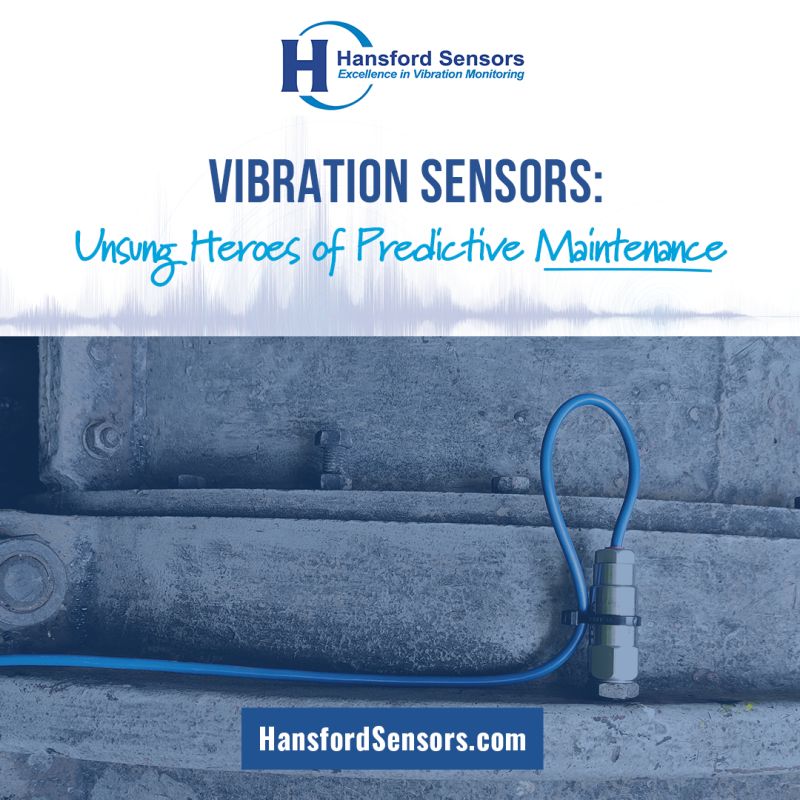
Best Practice: Why Vibration Sensors Are the Unsung Heroes of Predictive Maintenance?
Predictive maintenance relies on early insight into machine condition, long before failure occurs. At the heart of this approach are vibration sensors, quietly capturing critical data that reveals how equipment is truly performing. While often overlooked, vibration sensors play a vital role in identifying faults early, reducing downtime, and supporting reliable industrial operations.
The Critical Role of Vibration Sensors in Predictive Maintenance
Vibration sensors provide one of the earliest and most reliable indicators of developing mechanical problems.
- How vibration sensors help identify equipment issues before failure
Most rotating equipment faults such as bearing wear, imbalance, misalignment, and mechanical looseness generate changes in vibration patterns at an early stage. Vibration sensors detect these subtle changes long before they are visible or audible, allowing maintenance teams to intervene before damage escalates. - The importance of continuous monitoring for early problem detection
Continuous vibration monitoring provides a real time view of machine health. Instead of relying on periodic inspections or reactive maintenance, engineers can track trends over time and identify abnormal behaviour as soon as it appears. - Reducing unplanned downtime through timely intervention
Early fault detection enables planned maintenance rather than emergency repairs. By acting on vibration data at the right time, businesses can avoid unexpected breakdowns, minimise production disruption, and reduce the risk of secondary equipment damage.
Benefits of Vibration Sensors for Proactive Maintenance Strategies
Using vibration sensors as part of a predictive maintenance programme delivers clear operational and financial benefits.
- Improved reliability and performance of industrial machinery
By monitoring vibration continuously, maintenance teams gain confidence that equipment is operating within acceptable limits. This supports stable performance and reduces the likelihood of sudden failures that impact production. - Preventing costly repairs and extending equipment lifespan
Addressing faults at an early stage prevents excessive wear and damage to critical components. This not only reduces repair costs but also extends the working life of machinery. - Enhancing safety and operational efficiency with early warnings
Mechanical failures can present serious safety risks in industrial environments. Vibration sensors provide early warnings that allow issues to be addressed before they become hazardous, supporting safer working conditions and more efficient maintenance planning.
Real World Applications of Vibration Sensors in Predictive Maintenance
Vibration sensors are widely used across industries to support reliable and cost-effective maintenance strategies.
- Case studies from industries
In sectors such as power generation, cement, food & drink manufacturing, oil and gas, and mining, vibration sensors are used to monitor motors, pumps, gearboxes, fans, and compressors. Early fault detection helps prevent unplanned shutdowns and protects critical production processes. - How vibration sensors improve plant uptime and reduce maintenance costs
Plants that adopt vibration sensors for predictive maintenance typically experience fewer breakdowns, lower emergency repair costs, and improved asset availability. Maintenance activities can be planned around actual equipment condition rather than fixed schedules. - Integration with other predictive maintenance technologies
Vibration data is often combined with temperature, pressure, and lubrication monitoring to provide a complete picture of machine health. Integrated systems allow engineers to make more informed decisions and prioritise maintenance based on real operating conditions.
Vibration sensors for predictive maintenance may operate quietly in the background, but their impact on reliability, safety, and efficiency is significant. By providing early insight into machine condition, they enable smarter maintenance strategies that protect assets, reduce costs, and support long term operational performance.


